
How OnlyFans Billing Holds Work Before First Charges
OnlyFans verifies your card before it charges a subscription, and that check shows up as a small temporary authorization on your statement. The hold is $0.10, it is refunded, and it exists to confirm the card is valid and belongs to you. This article walks through the whole sequence: what you see in online banking, how long the hold lasts, and how to tell it apart from a real charge. BestOnlyFans refreshes its rankings every month.
If you have just added a card and seen a ten-cent line item, nothing has gone wrong. The authorization is part of routine payment setup, and it usually clears within a few business days. Below, the mechanics are broken down step by step so you know exactly what to expect before your first real subscription charge. The BestOnlyFans ranking method treats hold handling as a standard part of platform due diligence.
What OnlyFans Subscribers See First
A new subscriber typically starts by creating an account, adding a payment method, and then choosing a creator page. At the moment the card is saved or the first subscription is attempted, the platform runs a small authorization against that card. The result is a pending transaction for $0.10 that appears in online banking almost immediately, sometimes within minutes. This catches many people off guard because the amount is unusual and the descriptor may look unfamiliar.
Paid subscriptions on the platform range from $4.99 at the minimum up to $49.99 at the maximum, and the typical paid range sits between $4.99 and $15 with averages clustering around $5 to $10. Promotional first months can sit below $4.99, for example a $3 first month, but a base price may never go below $4.99.
Free pages work differently. A free page sets its price at $0 and earns through pay-per-view messages and tips, yet it still requires a valid payment method on file.
The $0.10 Hold Mechanics
The payment processor asks the card issuer whether the card is open, valid, and able to support a small charge.
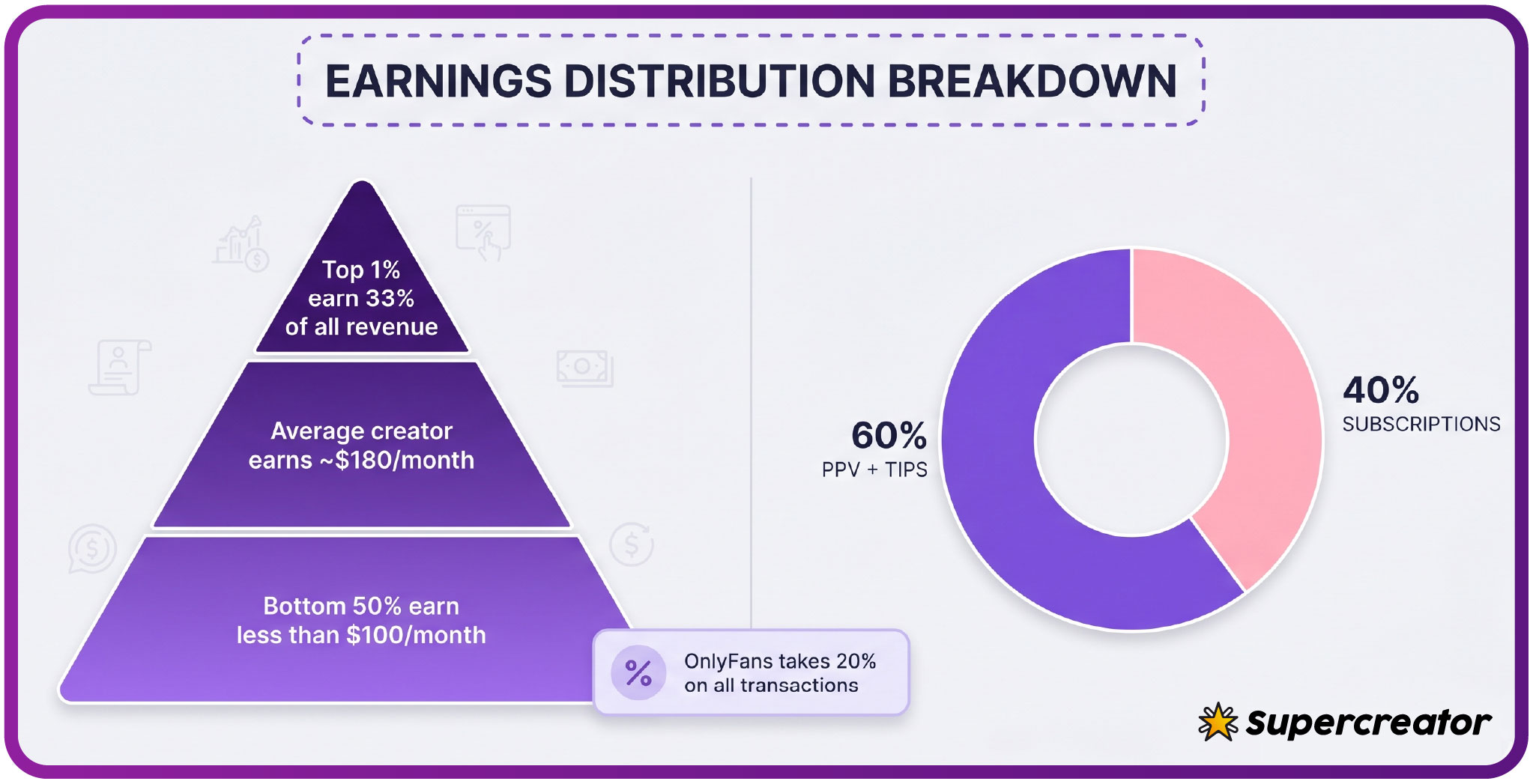
The platform takes a 20% fee on everything creators earn, and the creator keeps 80%. That split applies to subscriptions, tips, and pay-per-view unlocks, but it does not apply to the verification hold, because the hold is never a real payment to anyone.
There are several practical reasons this step exists, and each one maps to a category of risk:
- Fraud prevention: a stolen card number rarely survives a live authorization check.
- Age validation: the platform is restricted to adults, and a working payment method supports that gate.
- Payment method confirmation: it proves the card is active rather than expired or closed.
- Regional compliance: some markets require a validated payment instrument before content access.
- Subscription readiness: recurring billing needs a card that can accept an authorization.
When it does fail, the cause is usually a bank-side block rather than an empty account.
Timeline From Hold to Refund
The sequence below is the standard path:
- The platform sends an authorization request for $0.10 to the card issuer.
- The issuer approves and reserves the amount, and it shows as pending in your account.
- The merchant does not capture the charge, so the reservation expires.
- The issuer releases the reserved funds back to your available balance.
- The pending line disappears from your statement, or remains briefly as a reversed entry.
Some banks post the release faster, sometimes within 24 hours, while others take up to five business days. The delay is on the issuer side, not the platform side, which is why two people with different banks can see different timelines for the same transaction.
Tip: if the ten-cent line is still showing after a full week, call your bank and ask about the pending authorization rather than opening a dispute. Disputes on legitimate authorizations can slow down future card approvals.
The first genuine charge only appears when you actually subscribe to a paid page or unlock a pay-per-view message.
Distinguishing Holds From Real Charges
Reading a statement becomes much easier once you know the visual differences between a verification hold and a captured payment.
- Amount: a hold is $0.10, while a subscription matches the creator’s listed price and a pay-per-view unlock can run up to $50.
- Descriptor wording: holds often carry a generic or processor-style descriptor, while posted charges show a more complete merchant string.
- Pending versus posted status: holds sit in the pending section, and real charges move to posted.
- Position in transaction history: a hold appears at the moment the card is saved, not at the moment content is accessed.
- Content access: a real charge is followed by unlocked content, while a hold unlocks nothing by itself.
Paid chat commonly runs $3 to $5 per message, and tips can reach $100, so a genuine charge can be small too. The distinguishing factor is status and descriptor, not size alone, though the ten-cent figure is a strong hint on its own.
When a creator raises their subscription price, auto-renew stops and existing access lasts until the paid period ends. That behavior sometimes gets confused with a failed payment, but it is a pricing rule rather than a billing error.
If you are comparing platforms or researching how creators attract subscribers, guides to the best onlyfans promotion pages explain how ranking and discovery work, since there is no built-in discovery feed or directory on the platform itself.
When Holds Fail and What Follows
A failed authorization is not the same as a declined purchase, though both can look similar in a banking app. The platform treats a failed hold as a signal that the card cannot be validated, and it will not proceed to set up recurring billing until the issue is resolved.
- Insufficient funds for authorization: rare at ten cents, but possible on a near-empty prepaid balance.
- Bank security blocks: fraud systems sometimes flag small unfamiliar authorizations from digital merchants.
- Expired or invalid card details: a mistyped number, wrong expiry, or wrong security code will fail immediately.
- Regional payment restrictions: some card types or issuers are not supported for this merchant category.
When a hold fails, the platform typically allows a retry after the card details are corrected or the bank is notified. Repeated failures can temporarily block the payment method, so it is worth fixing the underlying cause before trying again.
The same pattern shows up in card-fraud cases, where a small test authorization is used to check whether a stolen number still works. That is why banks treat unexplained micro-charges seriously, and why resources on phishing recommend reviewing any authorization you do not recognize.
Payment Method Variations
Visibility, duration, and refund speed vary by issuer and by card type, and prepaid and virtual cards behave differently from standard credit cards. The comparison below summarizes the common patterns.
| Payment Type | Hold Behavior | Typical Clear Time |
|---|---|---|
| Credit card | Authorization appears as pending, released automatically | 1 to 5 business days |
| Debit card | Reserved against available balance, visible immediately | 1 to 5 business days |
| Digital wallet | Hold may be absorbed by the wallet balance or linked card | Often within 24 to 72 hours |
| Prepaid card | Authorization can fail if the balance is very low | Varies, sometimes up to 7 days |
| Virtual card | Hold appears like a normal card authorization | 1 to 5 business days |
Debit cards tend to be the most visible because the reserved ten cents reduces the available balance right away.
Prepaid cards are the least predictable. Some issuers decline any authorization that leaves the balance below a threshold, and others process it normally.
Statement Appearance and Privacy
A verification hold usually shows a processor-level descriptor that does not mention the platform by name, while a captured subscription charge often carries a more recognizable merchant string. The table below contrasts the two.
| Statement Element | Hold Appearance | Actual Charge Appearance |
|---|---|---|
| Merchant name | Generic processor descriptor | Recognizable merchant string |
| Amount | $0.10 | Subscription price, PPV unlock, or tip amount |
| Transaction type | Pending authorization | Posted charge |
| Location field | Often blank or processor region | Merchant region or online tag |
| Reference number | Authorization code, released on expiry | Persistent transaction reference |
Because the hold descriptor is generic, it can be confusing when several digital subscriptions are set up in the same month.
On shared accounts, a small pending line is less noticeable than a full subscription charge, but it is still visible to anyone with access to the statement. Anyone who needs full separation should use a dedicated card or a virtual card number for these services.
Best Practices for Smooth Verification
The steps below reduce the chance of a failed hold, a repeated authorization, or a confusing statement line.
- Confirm the card has enough available funds to support a small authorization, even on a prepaid balance.
- Notify your bank that a digital entertainment charge may appear, so its fraud system does not block it.
- Use a card in good standing with no recent declines or expired credentials.
- Verify the billing address matches the address on file with the issuer exactly, including postal formatting.
- Allow three to five business days for the hold to release before contacting anyone about it.
Repeated attempts on the same failing card can trigger a longer block on the payment method.
Once verification succeeds, the account is ready for normal use: paid subscriptions from $4.99 upward, pay-per-view unlocks up to $50, paid chat at roughly $3 to $5 per message, and tips. BestOnlyFans notes that none of those steps involve an additional verification hold unless the card is removed and re-added.
Device security matters too, because a payment method stays stored on the account after the hold clears.

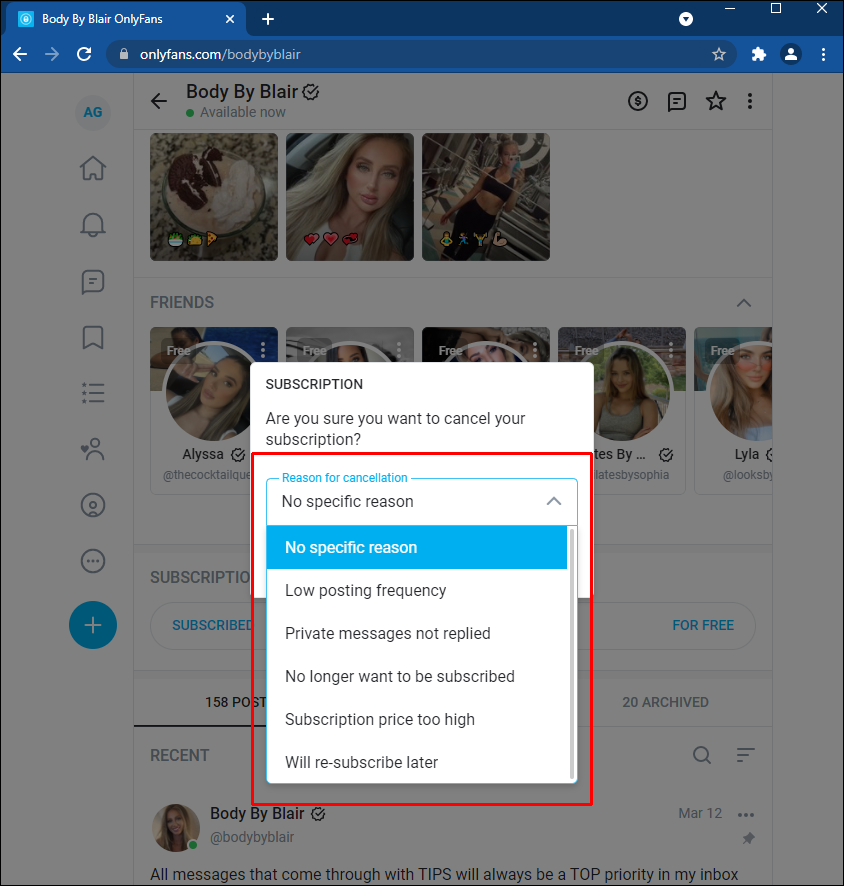
If you decide to cancel a subscription later, use the cancellation dialog in account settings and confirm the change before the next renewal date. Cancelling stops future renewals, but it does not cancel a pending verification hold, which releases on its own schedule.
FAQ
Why does OnlyFans charge $0.10 before I can subscribe?
It confirms the card is active, valid, and tied to a real payment method before recurring billing is enabled.
How long until the $0.10 hold disappears from my account?
The exact timing depends on your bank, and some wallets settle faster than traditional cards.
Will failed verification holds affect my credit score?
A failed authorization is not a credit event and is not reported to credit bureaus.
Can I use a prepaid card to avoid verification holds entirely?
No payment method bypasses the verification step. Prepaid cards still receive the ten-cent authorization, and they can fail if the available balance is too low.